SAFE has potential to be a ‘great tool’ for Canada’s defence industry, but many questions remain, says defence lobbyist
Sergiy Slipchenko | December 4, 2025

The federal government reached a deal with the European Union to become a part of the bloc’s €150 billion Security Action for Europe (SAFE) program, which could be a “real game changer” for Canada’s defence industrial base, said Jonathan Berkshire Miller, principal at Pendulum Group and co-founder of the firm’s geopolitical advisory. 

“The SAFE framework is pretty much a loan guarantee to individual EU member states to help build up their own industrial bases,” said Miller during a Dec. 3 interview with The Lobby Monitor. “The €150 billion that could be given in low-interest, long term loans would allow countries in the European Union that have neglected their defense industrial bases to grow them.” 

“Where Canada fits in is that they can also take part in some of those procurements… [and] this could be very helpful to the Canadian defense industry,” he continued “It is a lot of capital and at a much lower interest than anything that they would get from the banks or the financial market. You are not only getting capital, but you are tapping into a bunch of countries that have massive needs across the board.”

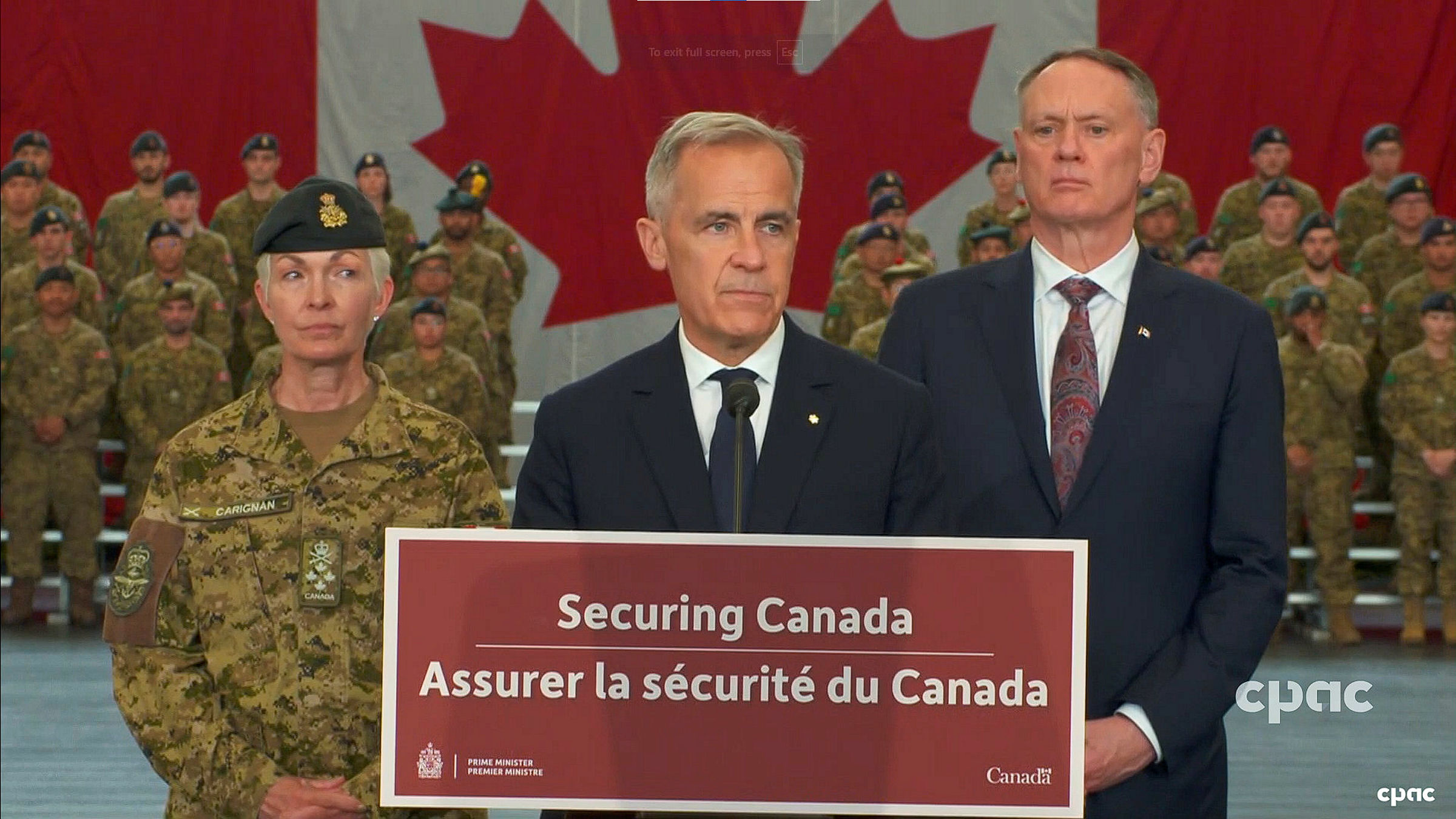
On Dec. 1, Prime Minister Mark Carney announced Canada’s addition to the program, which had been negotiated since June when discussions began to join a major European rearmament program. 

“European member states and the EU itself has lacked the ability to build up its own defense industrial base and we were seeing that play out now—most evidently in the war in Ukraine— that [European states] are not able to really provide much of what the Ukrainians need and are more reliant on the Americans,” said Miller, noting that this provides an opportunity for Canadian companies to provide a variety of products and services to NATO allies in Europe. 

Duncan Hills, a senior adviser on defence and security at NorthStar Public Affairs, told The Lobby Monitor that Canada joining the program could be a great opportunity for domestic defence manufacturers, but at the moment very few details are available about the program and how to access it. 

“It is a great tool to have in the toolbox,” said Hills in a Dec. 4 interview. “I haven’t heard anyone talk about what they’re going to use the tool for [and] I also hear some confusion about how to use the tool.”

Despite concerns raised about the potential entry cost that Canada will have to pay to be a part of the program, Hills believes that “it’s a good thing the government has done by joining [SAFE].” 

“The government has said very clearly they want to diversify where they get their weapons from and they want to create opportunities for Canadian companies to bid on things,” he added. “Participating in SAFE helps with both those things, but people I talk to seem to not really know how it works, including some of the government officials involved with it.” 

Hills noted that some of the confusion could be attributed to the program being at its early stages and that “it is too early in my book to say it’s not a good idea,” but the government should provide more guidance to industry on how to take advantage of the deal, which it has been “hyping up.”  

“The political and the practical need to be connected,” said Hills. “It is much more politically impactful if there is practical substance behind what you’re announcing and maybe that will come later…but I think pretty soon people are going to be saying, ‘Okay, well, where’s the substance behind this?’” 

From the industry side, Miller noted that smaller Canadian businesses will need to step out of their comfort zones and “do their homework” if they are to access the potential opportunities that the SAFE program provides.

“It does open more doors, but it requires an adeptness now too,” he said. “It is going to require a form of ‘defense industrial diplomacy’, if I can frame it that way, that Canada traditionally hasn’t needed so much because we primarily engaged with the United States on that.

“It provides opportunities, but I think especially for a lot of the small and medium enterprises which don’t have footprints overseas, they’re going to have to…understand the geopolitical standpoint of certain countries, finding ways to engage with governments, and have to do their homework a little bit more to make sure that they’re prepared for this fast moving geopolitical environment,” he continued.  

Miller told The Lobby Monitor that as the first and only member of the program that is not an EU-member state Canada does not share the same privileges.

“We have a percentage of deals that are allowed,” he said. “We can’t just conduct an entire deal and have access to the full capital for a certain deal. We have limitations… [and] part of any deal must be done through a European company or be [partially] based in the European Union.” 

Another potential setback with the program is the “very bureaucratic defense system in Europe,” said Miller, noting that the deal raises questions such as “how long will it take to get deals approved” and “will there be political infighting between the member states?” 

The Lobby Monitor