‘You can’t just get rid of strikes,’ says Teamsters Canada on government’s use of section 107
Labour unions are increasingly concerned by the federal government’s use of binding arbitration to end job actions as it infringes on workers’ rights and provides no incentive for companies to negotiate fair collective bargaining agreements, said Christopher Monette, director of public affairs at Teamsters Canada.
“The problem with section 107 [of the Canada Labour Code] is that it effectively robs unions of our ability to put pressure on companies through strikes, and that in turn takes away any incentive for large companies to negotiate fairly, since they know that the government will swoop in and…save them from having to deal with their own workers the minute things get serious,” said Monette in a Sept. 10 interview with The Lobby Monitor.
In August 2024, then-labour minister Steven MacKinnon used section 107 to issue a directive for binding arbitration following a lock out of 9,300 workers from Canadian National Railway Co. (CN) and Canadian Pacific Kansas City Ltd. (CPKC)
The union complied with the directive, but Teamsters Canada—which represents the railroad workers—filed an appeal and seeks to push it through to the Supreme Court of Canada, said Monette.
“It is as though the government believes they found a magic button to simply get rid of strikes, but, unfortunately, you can’t just get rid of strikes,” he said. “The right to strike is a charter right, something that we always use as a last resort, that is always used sparingly. We need to conserve that right and we are fighting to conserve that right.”
Monette told The Lobby Monitor that the union’s challenges are “making its way through the federal court system…and we do hope that in doing so, we’ll be able to resolve this issue of section 107 for all workers, for all time.”
Just a year following the railroad workers’ strike, Air Canada flight attendants initiated a job action effectively grounding the company from Aug. 16 to Aug. 19, 2025. The main area of dispute stemmed from Air Canada refusing to pay flight attendants for work done while an airplane was grounded, a common practice for North American aviation companies. Compensation was only provided when an airplane was “in motion,” regardless of weather conditions or emergency situations which could cause delays to last several hours.
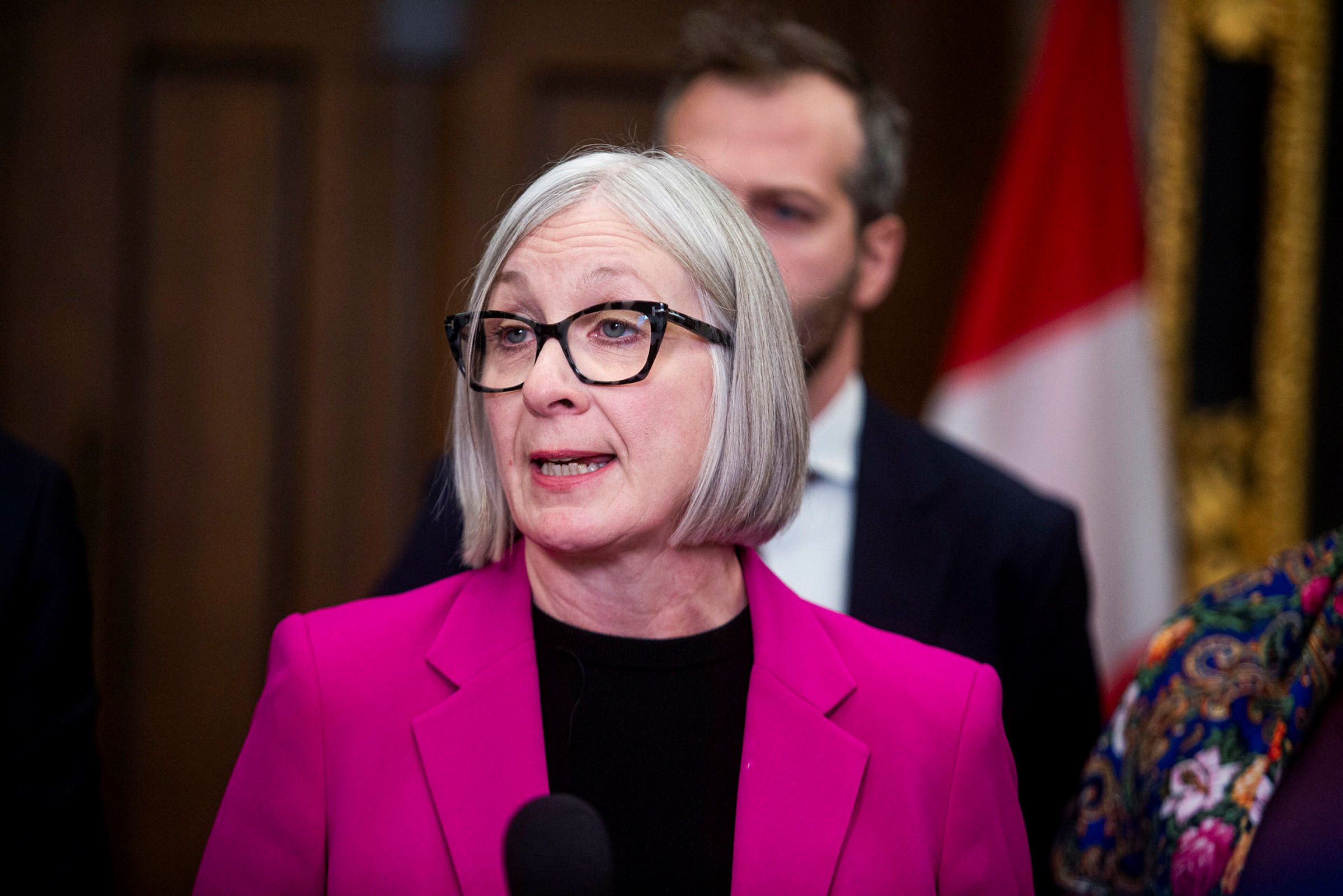
As Air Canada began to cancel flights in response to the job action, Jobs Minister Patty Hajdu attempted to resolve the matter through section 107. However, the flight attendants ignored the directive forcing Air Canada to reach an agreement with Canadian Union of Public Employees (CUPE), which represents the flight attendants.
This move has significantly weakened the government’s ability to use section 107 in future labour disputes, according to The Canadian Press’ Aug. 20 interview with Bea Bruske, president of the Canadian Labour Congress.
“It sets a precedent [that] you can defy, and you will find a solution at the bargaining table,” said Bruske. “It sets a precedent for the reality that [section] 107 is no longer effective, it is effectively dead.”
Prior to the Air Canada labour dispute, the federal government used section 107 eight times since June 2024, including the railroad workers’ strike, work actions in ports in Montreal, Que., and Vancouver, B.C., and a strike and lockout at Canada Post. The section was only used six times between 1995 and 2024.
Following the Air Canada workers strike, multiple advocacy groups and unions have called for the government to remove section 107 from the Canada Labour Code.
An insider’s look at Air Canada negotiations
An individual familiar with the negotiations between Air Canada and CUPE told The Lobby Monitor that many members of the union felt “a good deal of frustration” and were “very unhappy” with the final agreement that was reached between the two parties.
Although the individual reiterated that the result of the negotiations was better than Air Canada’s initial terms, many felt “insulted” by the final agreement, adding that they heard that “hundreds” of employees terminated their employment following the conclusion of negotiations.
“They are telling people who earn $30,000 a year that they should go and bargain when they’re up against some of the most well connected and powerful companies in the country,” they said. “No one else in almost any other line of work would accept doing the amount of work for free for a multi-billion dollar corporation and then flight attendants are told to do so every day.”
A similar situation may arise again as the collective bargaining agreement for WestJet’s flight attendants is set to expire on Dec. 31, 2025, warned the source. They noted that the government should consider addressing the issue through “systemic solutions,” such as legislation or regulations to avoid future work disruptions.
Pointing to the issue of paying flight attendants for ground work, they noted that the government should regulate a single minimum wage across the industry, instead of leaving workers to negotiate fair pay with every company individually.
Monette told The Lobby Monitor that working with the government and opposition MPs can be fruitful, but “it’s hard to completely regulate your way out of these problems.”
“We have gone down that route in the past—specifically with regard to two hours of service for train operators—and we have managed to secure stronger regulations regarding the amount of time and that people are expected to be working in operating trains,” he said. “Those were positive steps in the right direction, but the devil is always in the details and what we saw during the last round of negotiations is that the companies were still coming back at us and trying to find ways to weaken or undermine the spirit of those regulations and ultimately find ways to make our members work longer hours.”
Another example of effective legislation that can help workers was the anti-scab legislation enacted by the federal Liberals in 2024, said Monette. The legislation prevents companies from using temporary workers to continue operations while a job action takes place.
Monette told The Lobby Monitor that the legislation was crucial for workers employed by small and medium businesses where the federal government does not step in to force arbitration. However, the same cannot be said for major companies like Air Canada, CN, and CPKC.
“Although progress is still possible, there are limits to how far the government can go to regulate the day to day operations of every single company, hence why collective agreements are important. Hence why collective bargaining is important,” he continued. “I am not saying regulations are a bad idea, obviously not. We need stronger regulations, but at the end of the day, we also need to be able to bargain fairly, but we can’t bargain fairly if the government is going to come in and save the companies from themselves the minute a strike becomes a bit disruptive now.”