Auto makers raise concerns, EV advocates raise hopes following news of Chinese EVs entering Canada
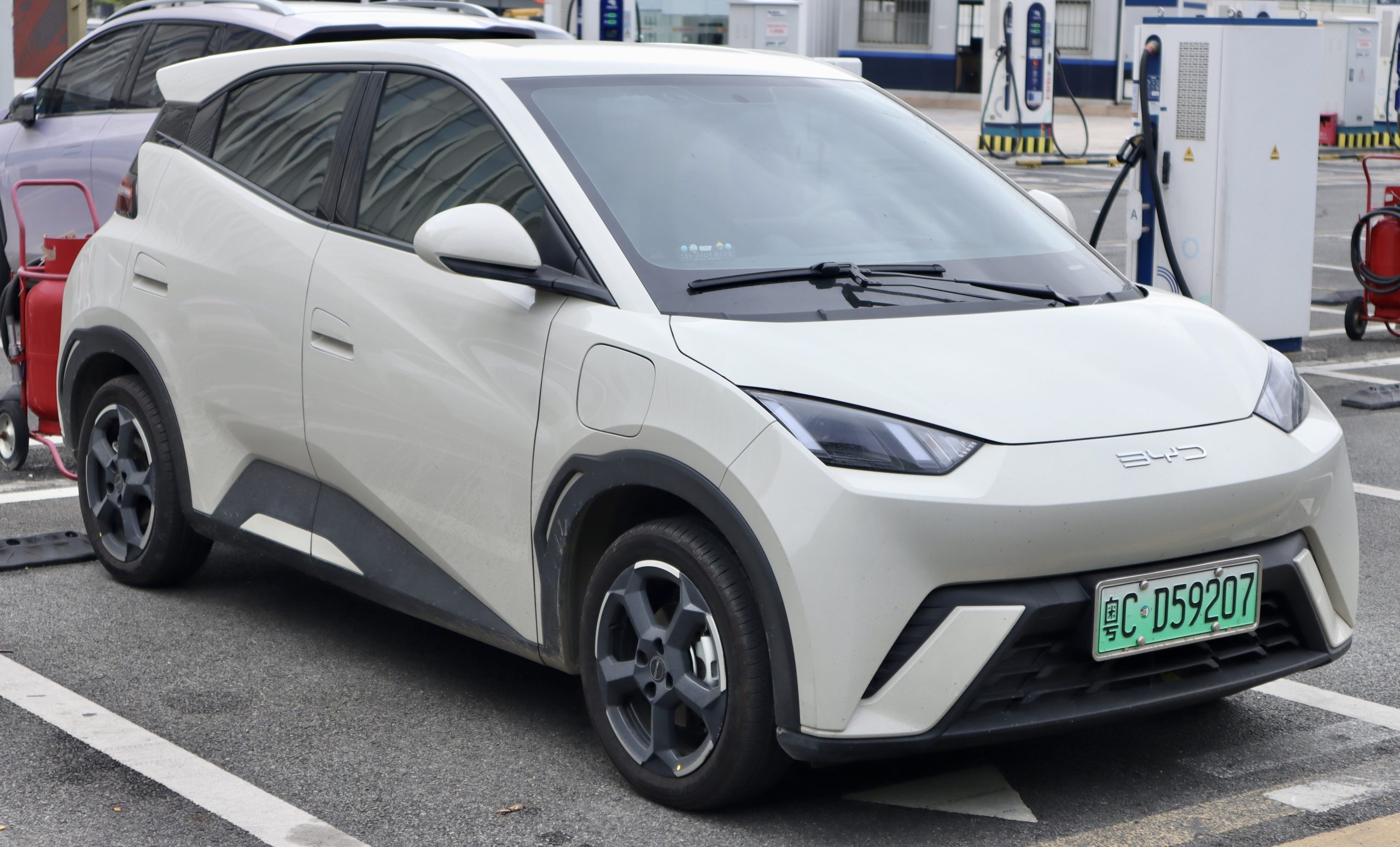
Representatives of the Canadian automotive sector and proponents of the transition to electric vehicles (EVs) had very different reactions to news that Canada would allow up to 49,000 Chinese EVs into the country, however, both agreed that it will have a significant impact on the domestic market and industry.
The main concern that auto manufacturers have over the new import quota for Chinese EVs is the uncertainty that comes with that decision, said David Adams, president at Global Automakers of Canada, which represents companies such as Honda, Toyota, Volkswagen, and Volvo.
“We don’t know the parameters of what’s exactly been agreed to, and there are lots of questions,” said Adams in a Jan. 26 phone interview with The Lobby Monitor. “That was a week and a bit ago and we have no further clarification around what the government has agreed to and we don’t know how the 49,000 is going to be allocated.”
Although the organization anticipated that Prime Minister Mark Carney’s meeting with Chinese President Xi Jinping would focus on China’s tariffs on canola products, which were placed as a result of Canada’s 100 per cent tariffs on Chinese EVs, there was no clear indication as to where those meetings would lead.
READ MORE: Canola lobby cautiously celebrates plan to reduce Chinese tariffs
“The government consulted [with us] at the time, in terms of the implementation of 100 per cent tariffs on Chinese vehicles, but there was no consultation on this aspect,” said Adams, adding that the organization only received a vague “heads up” about an important announcement related to the auto industry the night before Carney announced a new strategic partnership with the People’s Republic of China on Jan. 16.
“We had previously been advised that Chinese tariffs on canola and Canadian tariffs on EVs were two completely different things and the absence of any additional clarity just makes us more concerned,” he said.
“What are the guardrails around Chinese EVs coming into Canada? Up until a week ago the government had some serious concerns about cyber security, concerns about connectivity, concerns about unfair subsidization,” he continued. “How is this announcement going to impact the government’s own investment and the provincial government’s investment of $50 billion in trying to grow and cultivate our own EV ecosystem and EV production in Canada.”
Adams noted that the organization has made attempts to get answers to those questions from the federal government but all attempts to reach the Prime Minister’s Office and Industry Minister Mélanie Joly’s office have failed to yield a response.
“Thus far it’s been crickets from the minister’s office,” said Adams.
Clean Energy Canada welcomed the news as it saw the development in a different light. The organization touted Carney’s announcement as a win for consumers, stating that the import of lower cost Chinese EVs would lead to a more competitive market.
“We have found that Canadians really want EVs, but upfront cost continues to be the top barrier to adoption,” said Joanna Kyriazis, director of public affairs at Clean Energy Canada. “Last year, Canada was one of the only countries in the world that saw a decline in EV sales.”
Kyriazis told The Lobby Monitor that an analysis, which compared sales data across 50 different car markets, showed that Canada was the only country where EV sales figures declined.
EV sales data provided by Statistics Canada shows that 35,782 EVs were sold in Canada in the first quarter of 2024, but only 26,401 EVs were sold in the first quarter of 2025.
“We have an EV affordability problem [in Canada],” said Kyriazis. “We see that high-quality, low-cost EVs exist in other markets around the world, but they’re not currently available here.”
Clean Energy Canada believes the introduction of Chinese EVs will force other companies to adapt and create affordable EV options for Canadian consumers.
“Last year, we put out an analysis showing that over 20 EV models in the [European Union] are available under the equivalent of $40,000 Canadian and here we have access to one, the Fiat 500E,” said Kyriazis. “There’s this concern that Chinese EVs are going to come into markets and totally take over. But that’s not what we’re seeing in the EU, where we have those affordable [Chinese] EV models available.”
“Seven [out of 20] models were introduced [to the EU] by Chinese manufacturers, but 10 other ones were actually introduced by domestic EU car manufacturers like Nissan or Renault in response to the competition that the entry of Chinese EVs created,” she continued. “That is what we are hoping to see here in Canada.”
However, Adams noted that the 49,000 EVs that would be allowed to enter Canada would represent nearly half of all electric vehicles sold in Canada in 2025.
“It’s been framed that it’s only 3% of Canadian sales, but it’s roughly about half of EV sales and that’s a slightly different story,” he said.
Using the data available from the first three quarters of 2025, it is possible to estimate that total sales for 2025 would be around 110,260 and 49,000 new electric vehicles entering the market would represent about 44% of the total sales.