What makes a ‘good’ lobbyist? A lot

The Hill Times photograph by Andrew Meade
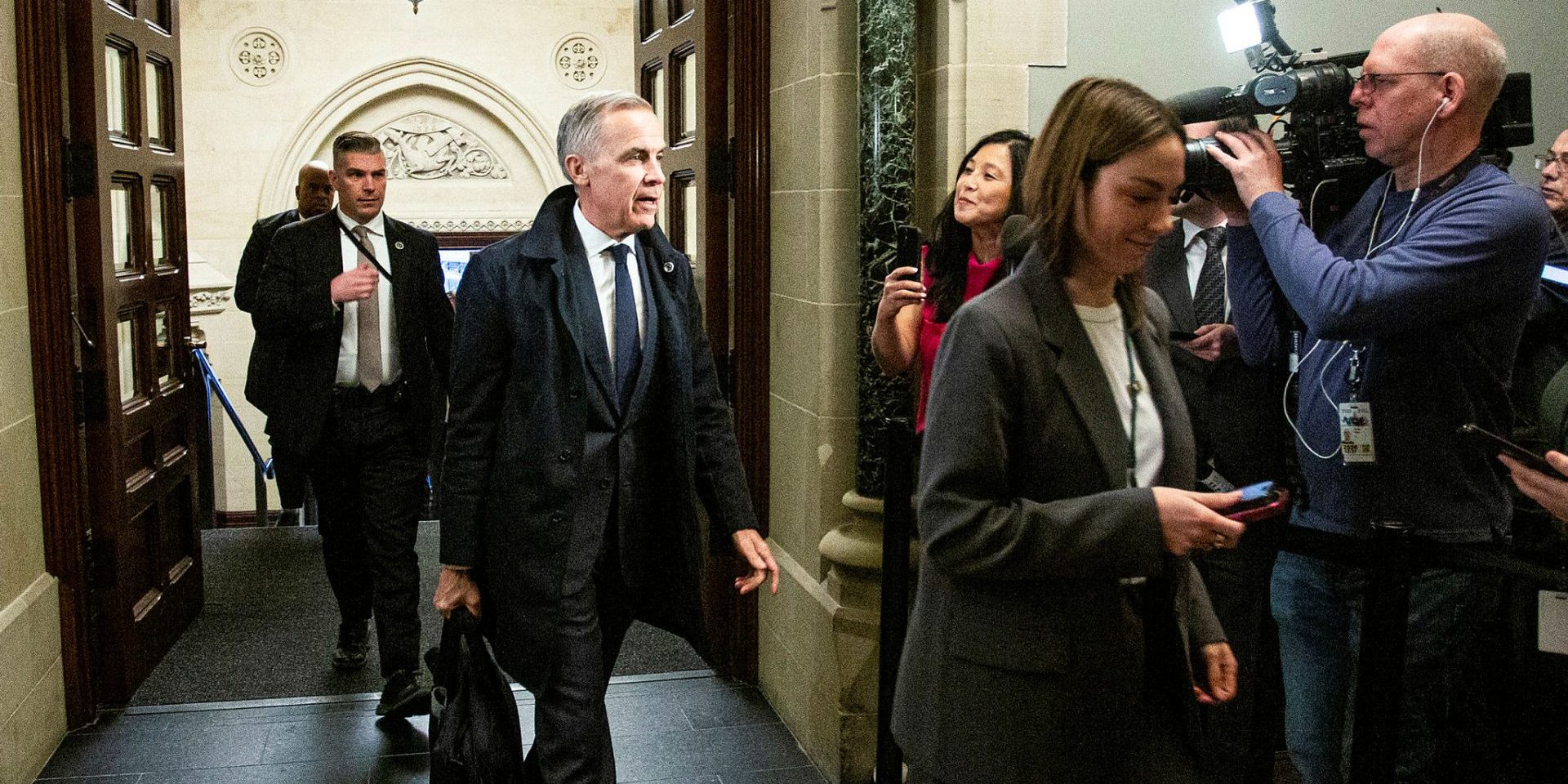
People pictured May 7, 2024, at the annual Politics and Pen party, the Writers' Trust's fundraiser for the Shaughnessy Cohen Prize in Political Writing, at the Chateau Laurier in Ottawa. The party usually attracts more than 500 people, including loads of lobbyists.
In this town, a good lobbyist is so much more than their contact lists. It helps to have a solid network and knowing the right people, but successful lobbyists are also good at solving problems, knowing the files and how to pitch them to cabinet ministers, being able to work with all political parties, and being trusted, say lobbyists.

“It’s less about a Rolodex,” said Jacquie LaRocque, founder and CEO of Compass Rose Group and a former federal Liberal ministerial Hill staffer, during a March 6 interview. “Rather, [it’s about] a deep knowledge and ties into the various ecosystems around what we do, and bringing those to bear.”
A “good” lobbyist doesn’t have to have a formal education in politics or experience on Parliament Hill, not that either of those hurt, says lobbyists interviewed for this story. They should start as problem-solving, honest communicators who are willing to work with all political parties.
“Tenacity is a core trait of anyone wanting to engage in the sector, and I would say also that you really have to have an extremely strong desire to affect the change that you’re looking for [and] to stay committed to it,” LaRocque said, who is currently registered to lobby for the Cable Public Affairs Channel, the Rural Prosperity Group, Canpotex Limited, Trigon Pacific Terminals Limited, the Canadian Music Publishers Association (operating as Music Publishers Canada), the Shaw Rocket Fund, the Canadian Rental Housing Providers for Affordable Housing, and PayPal Canada, according to the federal lobbyists’ registry.
Organic encounters ‘just as useful’ as Hill days: Cam Holmstrom

Cam Holmstrom, founder and principal of Niipaawi Strategies, said that a good network is one tool in a lobbyist’s tool belt and likened it to a garden—something that must be tended to in order to ensure that it flourishes.
“To a degree you need to have a [good] contact list. But to me, a contact list isn’t static,” he said during a March 5 interview.
“I’ve been off the Hill now for almost eight years [and] I would argue that my contact list is better than it was when I was there.”
Holmstrom worked on Parliament Hill as a staffer in the offices of various New Democratic Party MPs from 2009 to 2018. Holmstrom said he now lives outside of the Ottawa bubble, but is able to maintain his network by being selective about going to events where he’s likely to meet new contacts for different files or sectors.
“Me, personally, I’m not going to receptions. I’m not going to The Met [Métropolitain Brasserie]. I’m not in the [Parliament Hill] cafeteria every day. So how am I building relationships? When I am somewhere, I am making the most of my time,” said Holmstrom, who is currently registered to lobby for Real Ice Development Company and 3 Points in Space Media.
Lobbyists are often in “sales mode” when they’re in those advocacy hotspots so those interactions can feel “less genuine,” Holmstrom said. More organic encounters at charity events or even airports can be just as useful.
“With my last couple of bosses on Parliament Hill, it was always a running joke that whenever they were flying back into Ottawa, they’d have a new story about someone who they ended up talking to in the terminal or sitting next to on the plane who had a direct connection to what we were talking about or what we were dealing with,” he said.
For LaRocque, a good advocate needs to know how to effectively lobby the cabinet minister in their contact list before scheduling a meeting. A lobbyist should know the file and how to pitch a policy ask before calling a minister.
“Effective lobbyists really understand where the true power is in the ecosystem of Ottawa. It’s not always exactly at the level and the place that you’re thinking. Sometimes there’s a need to engage [with the public service],” she said.
“At the highest levels? Absolutely, but there is an equal need to engage at all levels within the system.”
By the time a lobbyist meets with a deputy minister, an MP, or a cabinet minister, the officials have often been briefed on the issue at-hand by their junior staff so it’s important to make connections from bottom to top, LaRocque added.

Pascal Chan, vice-president of strategic policy and supply chains at the Canadian Chamber of Commerce and an in-house lobbyist, said that a good lobbyist needs to be trusted, “period.”
“Playing into the notion that lobbyists can’t be trusted by either parliamentarians, staff, or the public servants they regularly interact with isn’t a good place to start. If you accept this framing while doing advocacy, you’re likely to fail in conveying why the legislative or regulatory proposal you bring to the table is a good idea,” he said in a March 9 written statement. “We’ve seen a number of organizations focused on advocacy conduct significant research on the value of trust, and there’s a good reason for that.”
“All of our other work—events, data, B2B [business to business], international trade missions, and more—adds to our credibility. We’re doing substantial work to enhance business success in Canada, whether or not all of our public policy ideas are taken up wholesale or not,” Chan added.
‘It’s about being curious’: Jacquie LaRocque
But if one asks Canada’s lobbying watchdog what makes a good lobbyist, she’ll say that it’s all about following the rules.
“From my perspective as commissioner, a lobbyist must be compliant with transparency requirements and ethical standards,” Lobbying Commissioner Nancy Bélanger said in a March 10 emailed statement.
“This means registering and filing reportable communications on time, as well as respecting government institutions, conducting their lobbying activities with integrity, honesty and professionalism, which are all values of the Lobbyists’ Code of Conduct,” said Bélanger.
LaRocque has been in the Ottawa advocacy space since 2006. She said she attributes her success and longevity to her curiosity and focusing on solutions to problems.
“It’s about being curious and interested in public policy, and delivering outcomes for people, for Canadians. In our case at Compass Rose, it’s wanting to dig deeper into issues and then finding solutions, or bringing opportunities forward. A great lobbyist actually views it from that macro perspective, and then goes about it very surgically,” she said.
When hiring, LaRocque said she looks for candidates who are great communicators with cross-sector knowledge and who know how to build relationships. Knowing when to lobby someone can be just as important as how to lobby someone when building and maintaining relationships with officials. If a file on an official’s desk is at a crisis point, offer to reschedule that day’s meeting.
“They are a human being doing their job, they’re not just a transaction. For you, a nice gesture is to say, ‘Hey, I know things are pretty busy right now. Did you want to reschedule?’” she said.
“That gesture goes back to communication and maintaining [and] growing relationships. Often having the ability to understand that this is the exact perfect timing, or it’s the exact wrong timing can dictate whether or not the meeting is fruitful.
hcresswell@lobbymonitor.ca