Housing advocates optimistic about Budget measures, but intergovernmental cooperation is ‘critical’
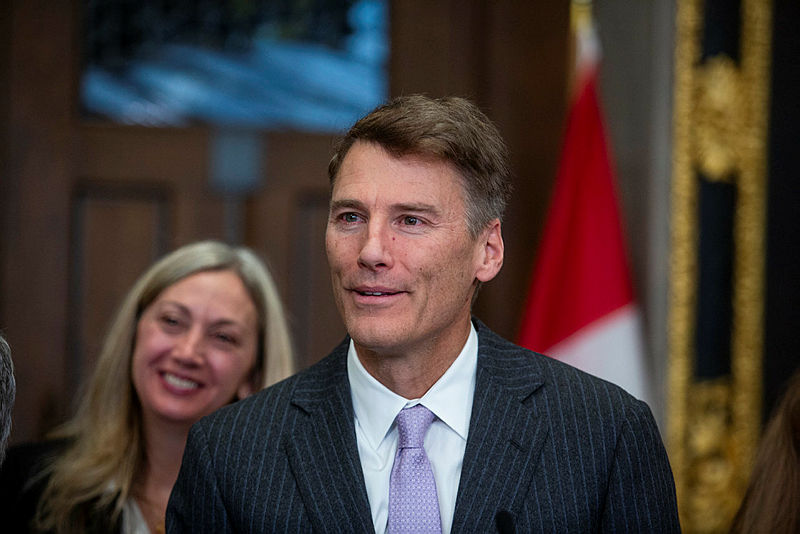
The Hill Times photograph by Andrew Meade
Minister of Housing and Infrastructure and Minister responsible for Pacific Economic Development Canada Gregor Robertson speaks during a press conference in the House of Commons foyer on Nov. 16, 2026.
The housing measures featured in Budget 2026 were pleasantly surprising with their “breadth and ambition,” said Jacob Gorenkoff, owner of Homeward Public Affairs, but “there’s an important distinction between making a historic investment and achieving a historic outcome.”
Janice Myers, CEO of the Canadian Real Estate Association (CREA), told The Lobby Monitor in a Nov. 19 interview that the association is “happy to see the progress that’s being made, the ambition that [Budget 2026] is signaling, but… Canada needs a housing strategy that works for everyone [and] we can’t lose sight of the next generation of Canadians who still aspire to home ownership.”

“Where we see the opportunity to do more is actually helping middle-income Canadians and young people, in particular, and families achieve actual home ownership,” said Myers. “What we have been talking about is that Canadians don’t just need more housing; they need more of the right kinds of housing, and practical ways to finance and purchase those homes.”
While the measures were encouraging, CREA is continuing its advocacy efforts in hopes that the government will include two recommendations that were the focus of the group’s fall advocacy day, according to Myers.
“There were two asks that we specifically talked to government about: One was around expanding [Canada Mortgage and Housing Corporation]’s mortgage loan insurance to support more middle housing supply and ownership options,” she said referring to the corporation’s existing mortgage loan insurance select program. “We were proposing that there be another category added for an ownership program for that missing middle.”
“Budget 2026 includes expanding mortgage insurance flexibility for smaller multi-unit development, but we would like to see more incentives to encourage the construction of townhouses, duplexes, and small multiplexes, which are more attainable options,” she continued. “Those in the middle are more affordable and help support the entire continuum and make sure there’s choices for young people who want to enter the market.”
The second ask that the association focused on “was around fairness in terms of reforming income verification rules to better reflect how Canadians are actually earning money today.”
Myers told The Lobby Monitor that the government is taking steps to modernize income verification, however, it is “only half the equation.”
“The issue isn’t just whether income can be verified, but whether that income is equitably considered when determining mortgage eligibility,” she continued. “For example, there’s over 2.7 million Canadians—back in 2023—that earn income through contract work and multiple income streams, so we would like the mortgage underwriting practices to be modernized to reflect those realities.”
Overall, CREA received the announcements in Budget 2026 as a sign of the government taking a positive direction on housing, “but there’s still a lot more work to do,” said Myers. “When you see the ambition of ending homelessness by 2030, that is excellent, [but] it’s going to take a lot more to actually get that in action because you can’t just have the funding at the federal level.”
To achieve that goal, there will need to be cooperation on the provincial and municipal levels.
“Everybody has to come to the table. You just can’t put money on the table and not have the cooperation and the activation at the provincial and municipal levels.
Gorenkoff, owner and CEO of Homeward Public Affairs, shared a similar view noting that the government’s ambition is well received, but it will take significant time and effort from everyone involved.

“The federal government deserves recognition for making a meaningful commitment to addressing some of the most persistent challenges facing Canadians, particularly those experiencing homelessness, poverty, and other forms of vulnerability,” said Gorenkoff in a Nov. 17 email to The Lobby Monitor.
“What I find especially encouraging is the recognition that housing, health, employment, and economic prosperity are fundamentally interconnected,” he continued. “If we’re serious about building a stronger Canadian economy, we need to invest in ensuring that people have somewhere safe and affordable to live, access to the supports they need, and opportunities to participate meaningfully in our country’s future.”
Gorenkoff pointed at various initiatives in the budget such as the proposed $10 billion for supportive and transitional housing, $5 billion Integrated Supports Fund, additional investments in non-market housing, and long-term renewal of homelessness prevention programs, adding that they “represent significant steps forward.”
A significant portion of Homeward’s work on behalf of its clients involved “advocating for a more integrated approach to housing and support services, and I think we’re seeing a meaningful recognition of that need reflected in the government’s priorities.”
Although the objective of ending homelessness by 2030 is something Gorenkoff “would love to see,” there needs to be a realistic approach to the subject as it would need an “extraordinary level of coordination required to make it happen.”
“Homelessness isn’t simply a housing supply problem,” said Gorenkoff. “It’s also connected to health care, mental health, addictions, income security, and access to community services. Many of the policy and service-delivery responsibilities associated with those issues fall primarily within provincial and territorial jurisdiction, while municipalities also play essential roles.”
Gorenkoff highlighted that the federal government is aiming to take a leading role in financing the necessary new housing and infrastructure, but it places the responsibility for ongoing operating funding and wraparound services on provinces and territories.
“That division of responsibilities makes intergovernmental coordination absolutely critical,” he explained. We can commit billions of dollars to constructing supportive housing, but if provinces and territories aren’t prepared to sustainably fund the services that keep people housed, those investments won’t achieve their full potential. I think this is where the real test of the government’s ambition lies.”
“I’m genuinely optimistic about what this budget could accomplish, but achieving its ambitions will require governments to work together, listen to the organizations delivering these services, and recognize that ending homelessness is a shared responsibility,” concluded Gorenkoff.